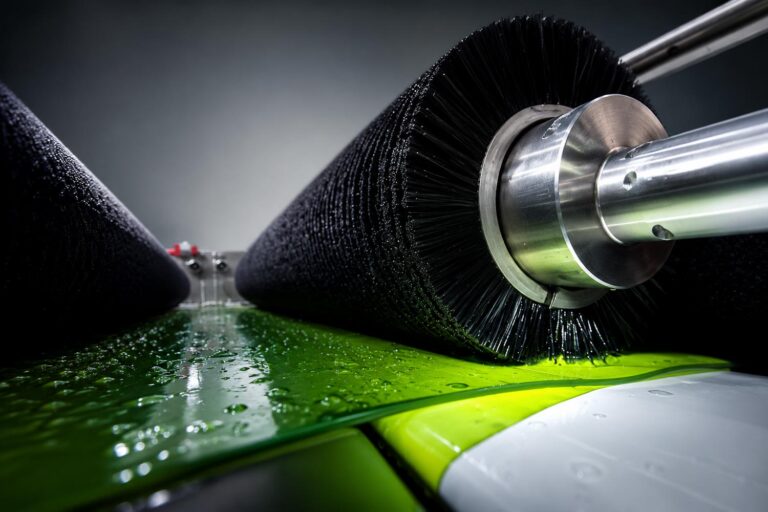
In flexographic printing the anilox roll is the heart of ink transfer: its microscopic cells meter the exact amount of ink that reaches the plate and, from there, the printing substrate. When the cells become clogged with dried ink, coatings or process residues, the carrying volume decreases progressively. Every printer knows the result: falling colour density, shades that no longer match the approved proof, hours lost adjusting press and colour, and a steady rise in waste.
The limits of manual cleaning
Manual cleaning of anilox rolls with brushes and chemicals is still widespread, but it presents drawbacks that are hard to ignore. It is a lengthy operation that takes valuable time away from the operator and does not guarantee repeatable results: cleaning quality depends on the person and on the care taken. It also exposes the operator to prolonged contact with chemicals and, if carried out with unsuitable tools or pressures, risks damaging the ceramic or chrome surface of the roll, compromising a high-value component.
Automatic washing: a standardised, repeatable process
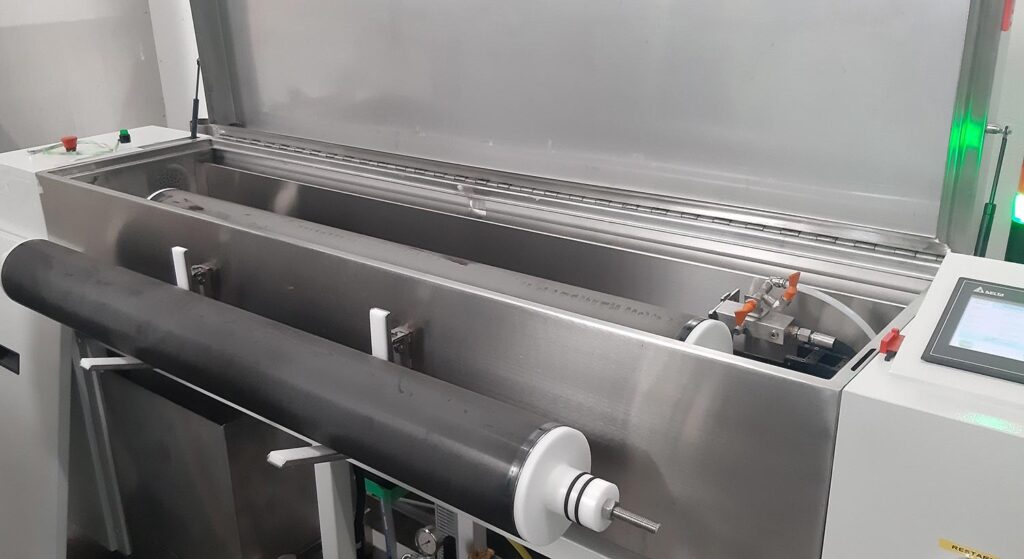
Automatic anilox washing systems were created to solve precisely these problems. A dedicated system such as those in the ANILOXMATIC range from OVIT performs controlled, repeatable washing cycles that restore the cells to their nominal volume without mechanical aggression and without depending on the operator’s manual skill.
The concrete advantages for the printer can be measured on several fronts: operator time is optimised, because the machine works autonomously while staff focus on higher-value activities; chemical consumption falls thanks to integrated recirculation; the cleaning process becomes standardised and documentable; anilox service life increases appreciably, because regular washing prevents the build-ups that are hardest to remove. To this is added a benefit that is often underestimated: lower operator exposure to chemicals, with positive effects on safety and on the working environment.
When should anilox rolls be washed?
The ideal frequency depends on the type of ink (water-based, solvent or UV), on the roll’s line screen and on production intensity. The general rule is simple: cleaning must be preventive, not corrective. Waiting until the drop in density is visible in print means waste has already been produced. Integrating automatic washing into the maintenance routine — at the end of a shift or of a job, for example — keeps the anilox fleet in optimal condition at all times and makes the result predictable from the moment printing begins.
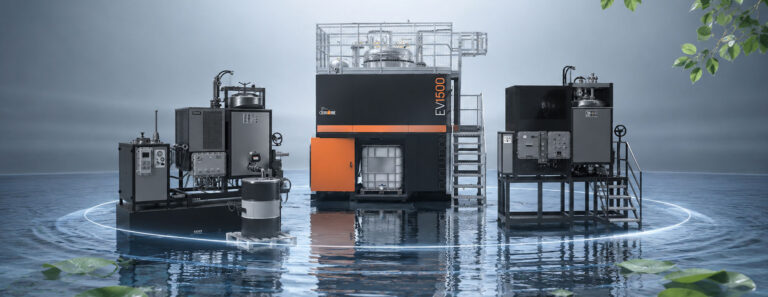
The OVIT solution
For over 60 years OVIT has designed and manufactured automatic washing systems for industrial printing, chosen by printers and distributors all over the world. The ANILOXMATIC range offers models and configurations suited to every roll format and every production volume, backed by a fast and efficient technical support service.