Every machine or part washed with solvent inevitably generates a contaminated product. For the company this translates into a double cost: on one side the continuous purchase of new solvent, on the other the disposal of spent solvent as hazardous waste, with all the economic, administrative and environmental burdens this entails. There is, however, an approach that turns this logic on its head: solvent recovery through distillation.
How solvent distillation works
The principle is physical separation: the contaminated solvent is heated in a controlled manner until it evaporates, while the contaminants — inks, resins, sludge — remain in the residue. The vapour is then condensed and the recovered solvent returns to the production cycle with the same chemical and physical characteristics as the original, ready to be reused in subsequent washing operations. The result is immediate and measurable: less solvent to buy, less waste to dispose of, less overall waste.
Automation and safety
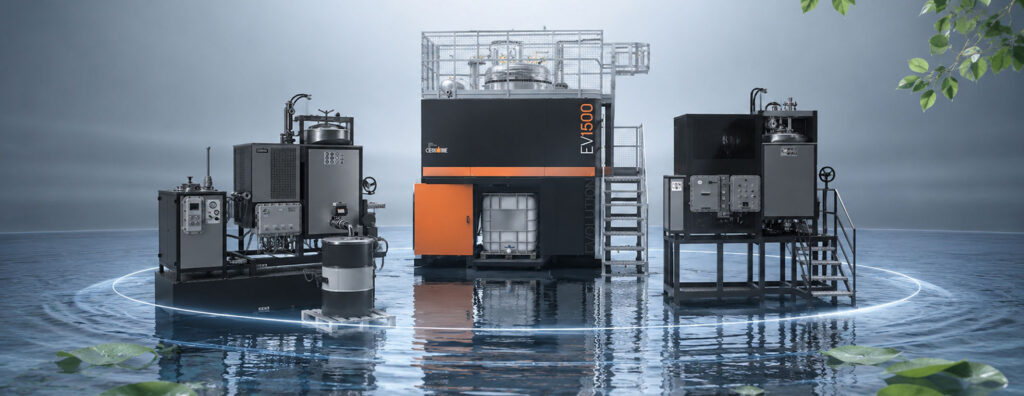
Ciemme distillation units, developed by OVIT’s industrial partner, bring this principle to industrial plant scale. The cycle is fully automatic and runs continuously, keeping human intervention and machine downtime to a minimum. Vacuum distillation makes it possible to treat even solvents with high boiling points under safer and more efficient conditions, while the self-cleaning system eliminates manual residue removal. ATEX certification guarantees suitability for installation in potentially explosive atmospheres, an essential requirement when working with flammable solvents.
The systems are modular and configurable for every sector — from printing to coating, from chemicals to photopolymers — with treatment capacities of up to 8,000 litres per day and Industry 4.0 integration, which also opens the door to tax incentives linked to the digitalisation of production processes.
Closing the loop: washing + recovery
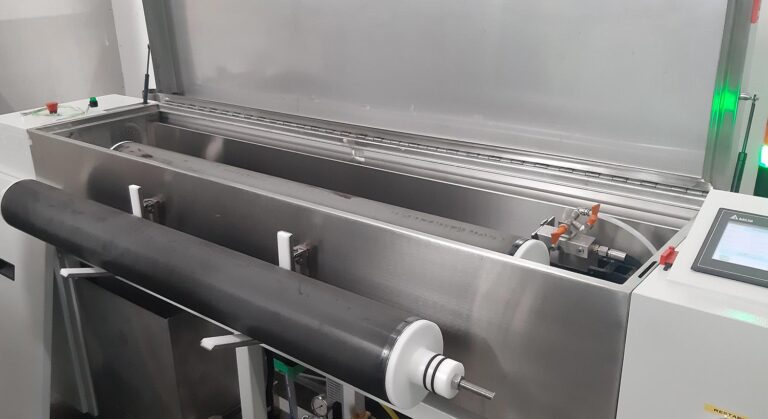
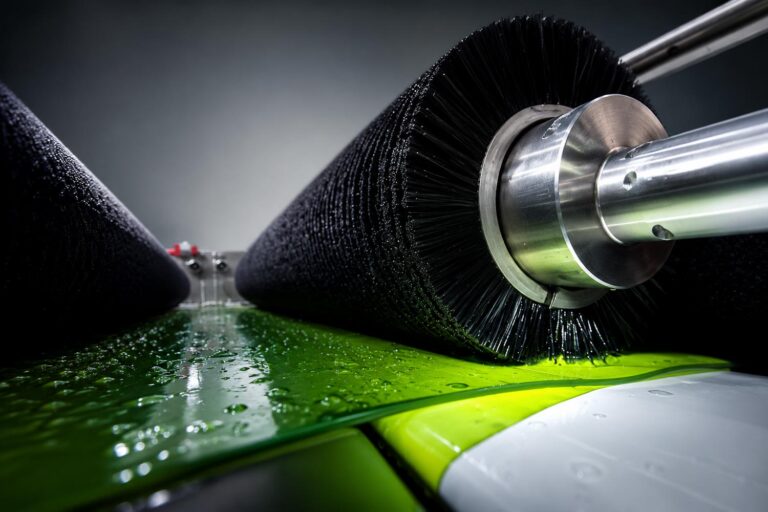
For a printer, combining OVIT automatic washing systems with a Ciemme distillation unit means closing the loop of the process: the machines wash the various parts in a standardised and efficient way; the distillation unit regenerates the solvent used and puts it back into circulation. This is the industrial synergy between the two companies, today part of the same group: a single supply chain that brings together cleaning quality, lower operating costs and both economic and environmental sustainability.
An investment that pays for itself
The return on investment in a distillation system is easy to calculate by comparing three figures: the annual cost of purchasing new solvent, the cost of waste disposal and the volume of recoverable solvent. In most production facilities with medium to high consumption, recovery covers the investment in a surprisingly short time — and from that point on it generates nothing but savings.